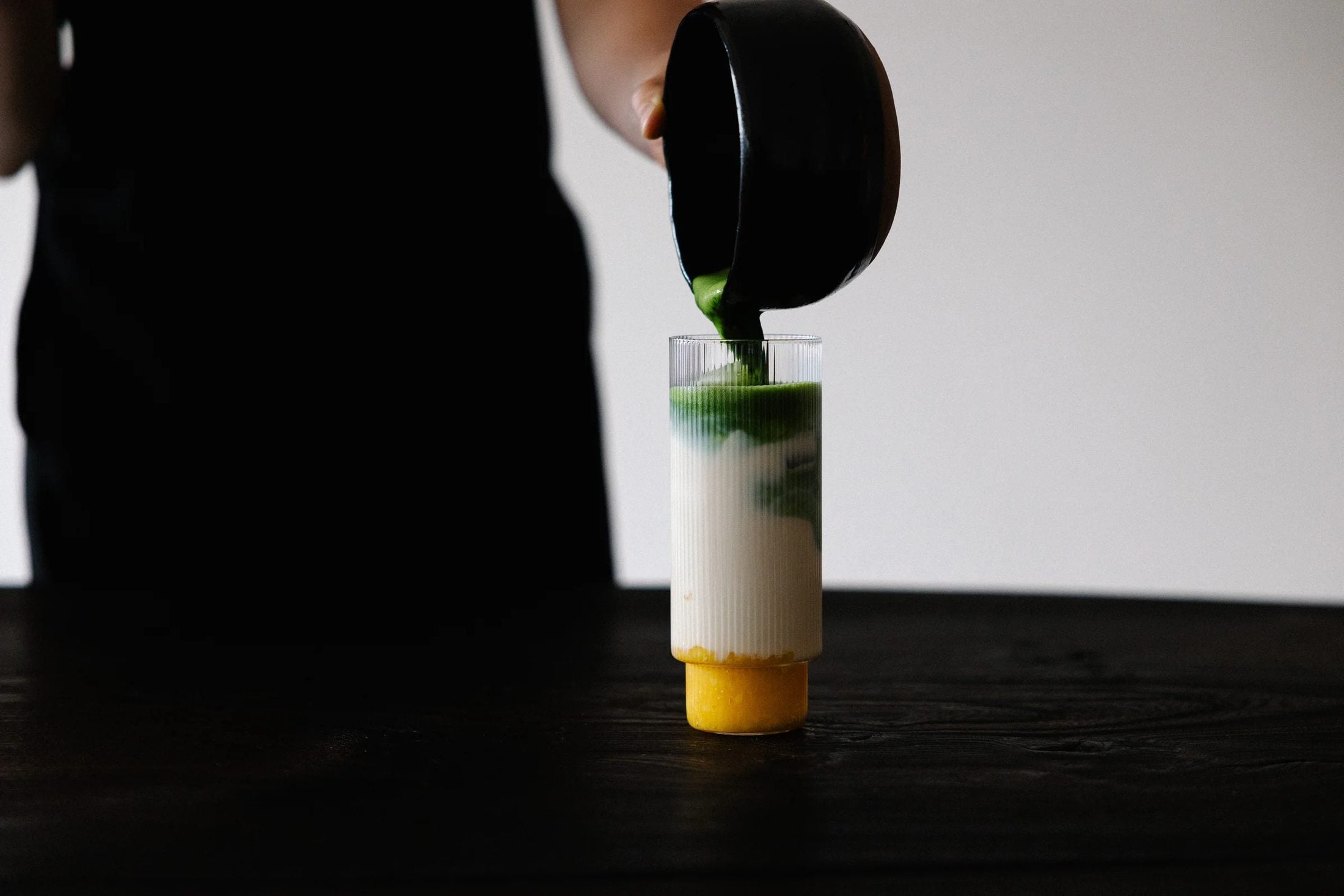
Uji, Kyoto
A field, a mill, and not much in between.
Four hectares under shade cloth, one family, one granite mill.
Where it comes from
Uji, Japan
Uji has been growing tea since the twelfth century, and the reason is dull and geographic: river fog, cool nights, and soil that holds water without drowning the root. Our producer works four small fields there, all of them covered for the last three weeks before picking.
Who we are
We started because good matcha was hard to find
Most matcha sold outside Japan arrives with no field, no harvest date and no mill date. Blended, warehoused, sometimes a year old by the time it reaches a whisk. The powder is still green, so nobody asks.
We wanted the opposite. One producer, named. One lot at a time, dated. When a lot runs out it comes off the site rather than getting quietly refilled with something else.
The work
Slow on purpose
How we buy
Small lots, milled to order
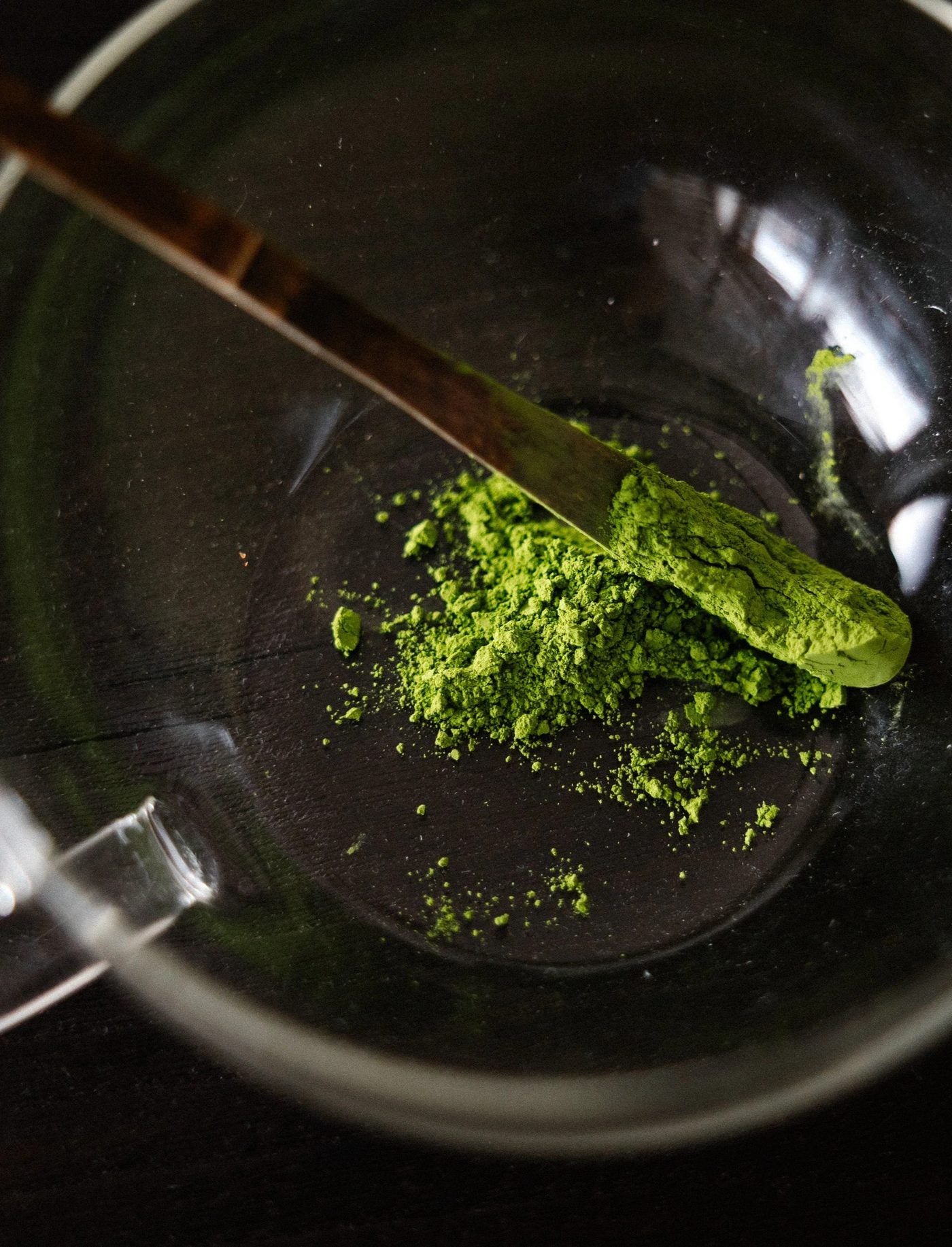
Granite mills turn at about forty grams an hour. Push them faster and the friction heats the leaf and flattens the flavour, which is why industrial matcha tastes like it does. We buy what one mill can produce and we buy it often, rather than warehousing a year of stock.
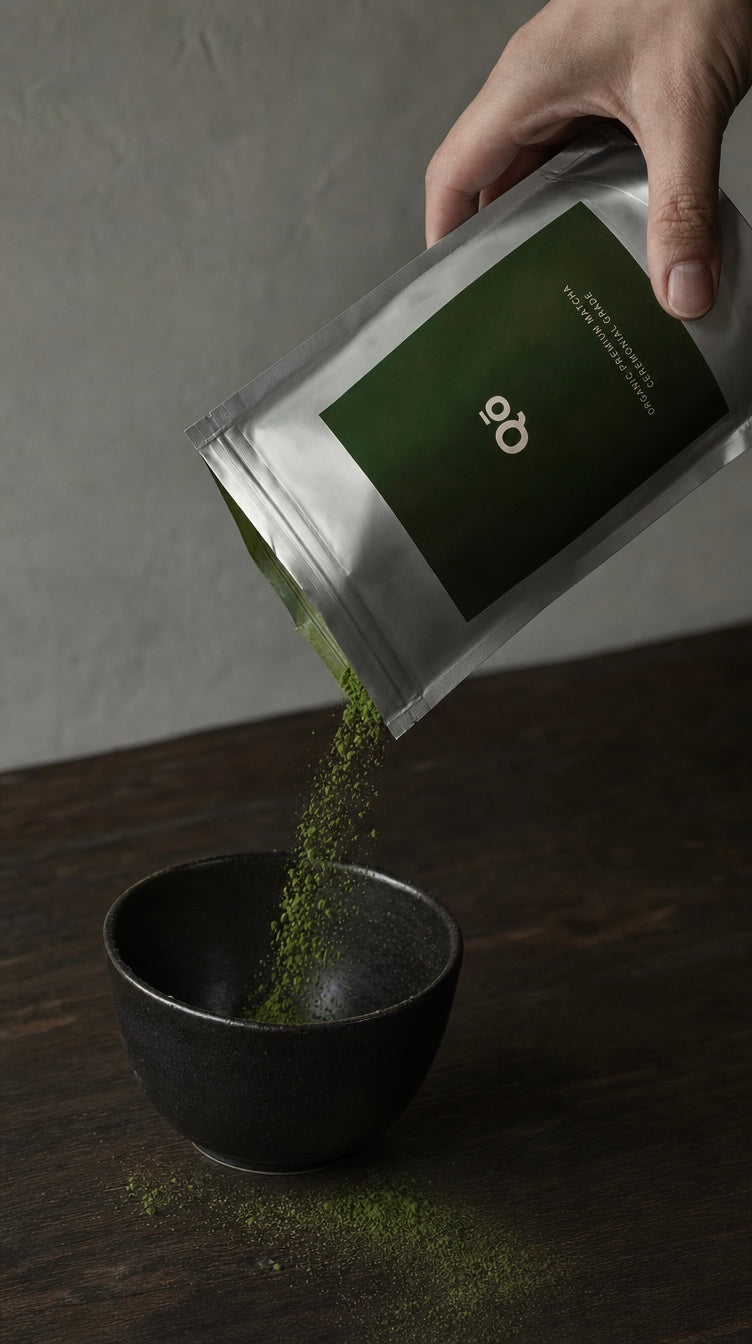
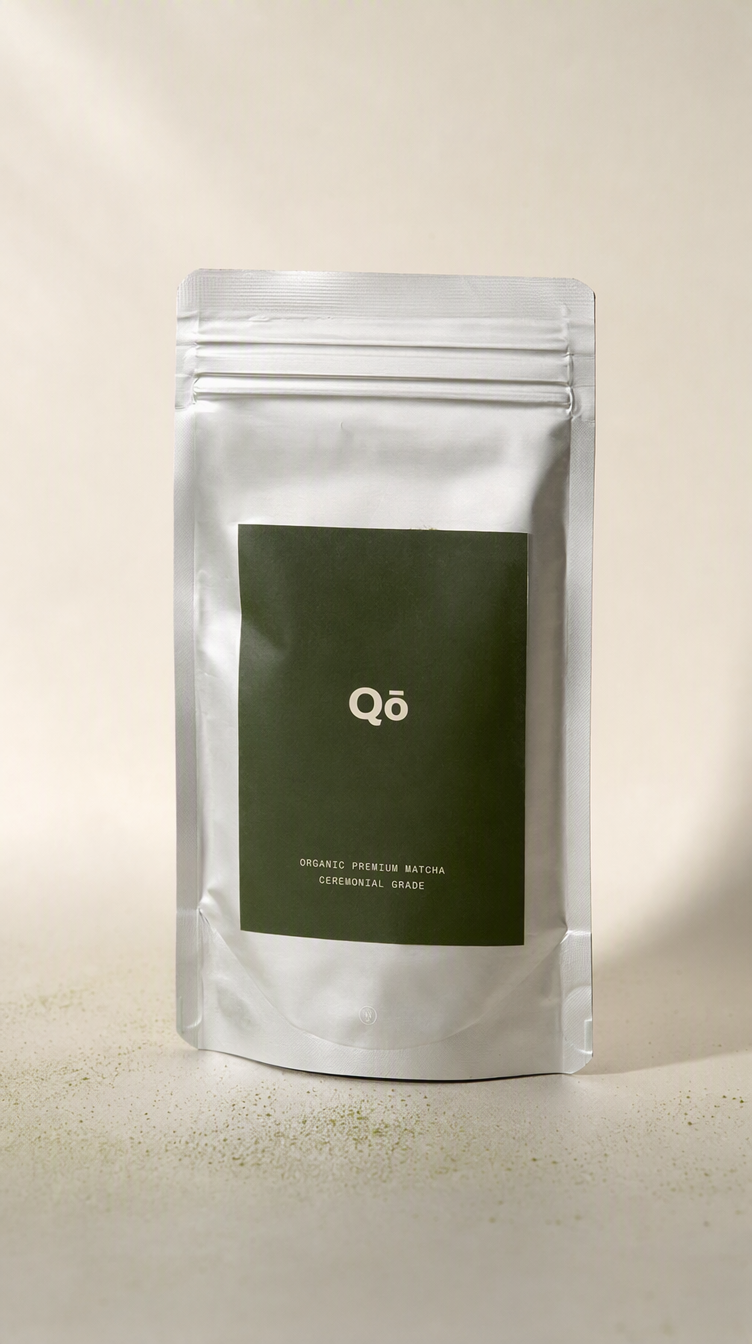
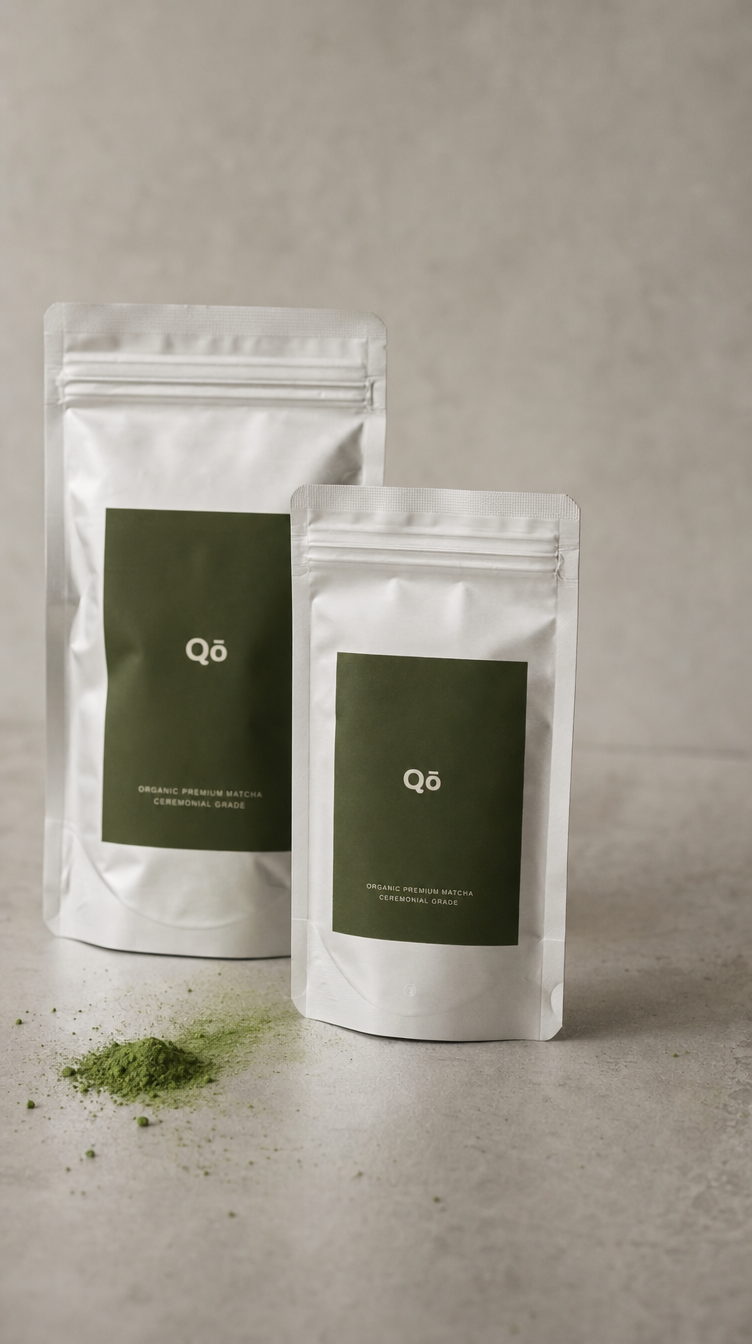
Every pouch tells you what it is.
Lot number, field, cultivar, harvest week, mill date. Printed on the pouch and listed on the product page. If we cannot tell you those five things, we do not sell it.
Lot alerts
Know when the next lot lands
Small harvests sell out. One email per lot, nothing else.